If you’ve been in the fleet world long enough, you’ve heard it before:
You ask your solution provider for help—whether it’s adjusting a process, tweaking a report, integrating systems, or tailoring the product to your operation—and they say, “Sorry, we can’t do that.”
That’s when you know: you’ve outgrown your provider.
In this business, “no” is a luxury fleets can’t afford. Budgets are tight. Timelines are tighter. And when a vendor refuses to adapt to the way you run your operation, they’re not solving problems—they’re adding to them.
Take your telematics provider, for example. Maybe you need your telematics data customized to your policies or view your vehicle and driver performance data configured in a certain way. If their first instinct is to say “no,” or worse, “that’s not supported,” it’s not just a missed request—it’s a missed opportunity to make your fleet stronger.
Real-World Problems Don’t Fit Neatly in a Box
Every fleet is different. Your routes, your drivers, your data needs—they’re not like anyone else’s. So why do some providers act like one-size-fits-all software should be enough?
The right partner listens. They ask questions to understand. And when your challenge doesn’t fit inside the box, they figure out how to build a better one.
Here’s what a “yes” mindset looks like in the real world:
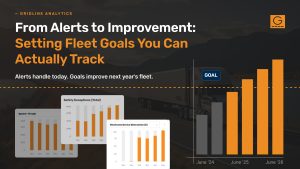
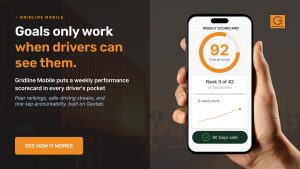
- Custom Driver Scorecards – You care about combining multiple data sets not just telematics. The default report cares about something else. A partner worth keeping finds a way to align the tool to your KPIs—not the other way around.
-
- Mixed Fleet Compatibility – You’ve got a few newer trucks with proprietary systems and a bunch of older units. You want to understand vehicle performance across your entire fleet my year, make, model and type, a true partner rolls up their sleeves and helps figure it out—not punt the issue.
-
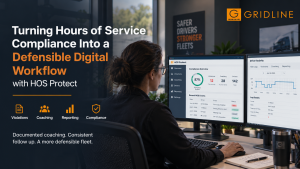
- Compliance – You need a better way to manage your drivers as it relates to HOS violations for training and corrective action. You don’t need a ticket—you need a partner who’s already working on a fix.
-
- Hardware Setup and Configuration – You’re rolling out 100 vehicles across multiple locations. A partner doesn’t just drop hardware at your door, they help you configure it, tune settings to your fleet’s needs, and make sure it works as intended from day one.
-
- Back-office Integration – Your operations team needs telematics data to sync with your ERP or dispatch software. A weak partner shrugs. A strong one helps bridge the gap—either with their own developers or a trusted partner.
-
- Region-Specific Reporting – You operate in jurisdictions with unique telematics data needs. A good partner helps tailor reporting and alerts to match those requirements—so your compliance doesn’t become a guessing game.
-
What “Yes” Really Means
It doesn’t mean anything is possible. But it does mean they try.
-
- A partner says: “Let me look into that.”
- A vendor says: “We don’t support that.”
- A partner says: “What outcome are you trying to achieve?”
A vendor says: “That’s not in the system.”
-
- A partner says: “We haven’t done it that way before, but here’s what might work.”
A vendor says: “That’s not on the roadmap.”
-
- A partner says: “We can configure that rule for you.”
A vendor says: “That feature’s locked.”
A partner says: “Let’s work with Geotab to make this happen.”
A vendor says: “That’s outside our scope.”
A great telematics partner doesn’t treat your challenge as an inconvenience—they treat it like their job.
What to Do Next
If this sounds familiar, here’s how to test your current provider:
Pull 5 recent requests – Did they offer options, or shut you down?
Ask for a creative solution – Not a feature. A solution.
Gauge their curiosity – Do they ask follow-up questions about your challenge? Or do they hide behind canned responses?
You need a partner who sees a complex request as a chance to collaborate, not a reason to close the ticket.
Final Thought
Your job is hard enough. You don’t need another obstacle dressed up as a software contract. You need a partner who’s in the trenches with you—solving problems, not creating new ones.
So, the next time you hear “no” or “unfortunately,” ask yourself: Is this the best they can do?
Because if it is… it might be time to expect more and find a partner who will walk side by side with you.